

Gears and drivetrain 5.13
Anatomy of a chain
A chain looks simple, but it's a few hundred small parts working together. Knowing what each one does makes sense of everything else: why chains wear, why wax works, why some links are single use, and why the gears shift where they do.
Get the printable PDFDetails worth knowing
The quick link
A quick link is just an outer link that comes apart by hand. It always joins two inner links.
Shaped plates
Modern plates are chamfered and cut away so the chain climbs onto the next cog quickly.
Direction
Some chains have to go on one way round. Check for an arrow or writing that faces out.
How it works
- Outer and inner links take turns. That's why a chain has to be joined inner to inner, with an outer link or a quick link.
- Each roller turns on its bush as it meets a tooth, so the chain rolls on and off rather than sliding.
- The pin turns inside the bush every time the link bends round a cog. That's where wear happens.
- So keep the inside clean. Dirt between the pin and bush grinds them away. Wax keeps it out.
The parts
| Part | What it does | Wears by |
|---|---|---|
| Outer plates | Hold the pins, joining the links | Hardly at all |
| Inner plates | Hold the bush the roller turns on | Hardly at all |
| Pins | Join one link to the next | Rubbing inside the bush |
| Bush | Part of the inner plate on modern chains | Rubbing on the pin |
| Rollers | Meet the teeth and turn | Slowly, on the outside |
Pin and bush wear is what makes a chain grow longer. See guide 5.04.
Every chain
| Size | Is |
|---|---|
| Pitch | 12.7 mm (1/2") |
| Links in a new chain | about 110 to 126 |
Tools
- Chain tool
- Quick link pliers
- Chain checker
Things that catch people out
- You can't join two outer links. Shorten by a whole link (one inner and one outer), unless it's a half-link chain.
- Never push a pin all the way out on a modern chain to rejoin it. Use a quick link or a new joining pin.
- Single-use quick links are made to be fitted once. Reusing them can let them pull apart.
- The outside of a chain can look fine while the pins inside are worn out. Measure, don't judge by eye.
From the workshop
Once you know the wear is inside, between the pin and the bush, it's easy to see why wax makes chains last so much longer: it fills that gap so dirt can't get in. Wet lube does the opposite.
Michael
Book it inChains in the shop
See them all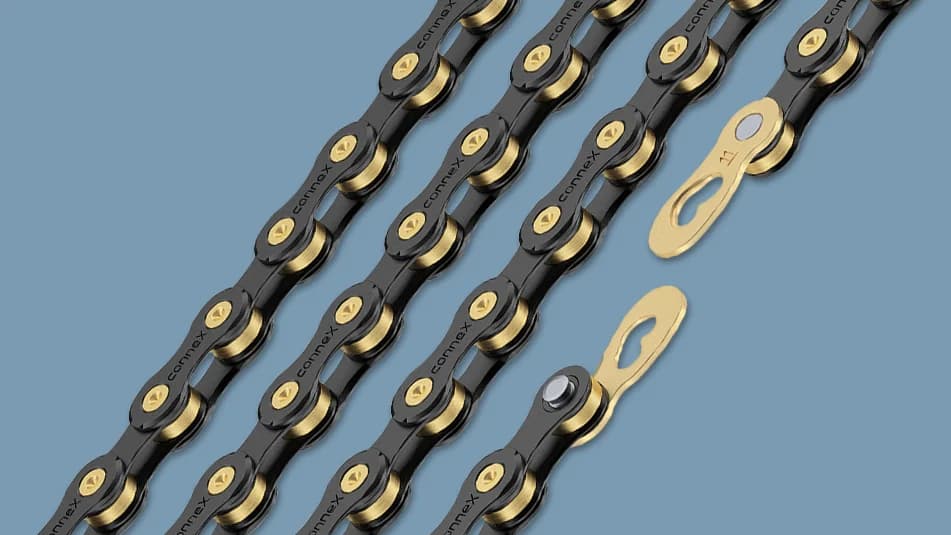
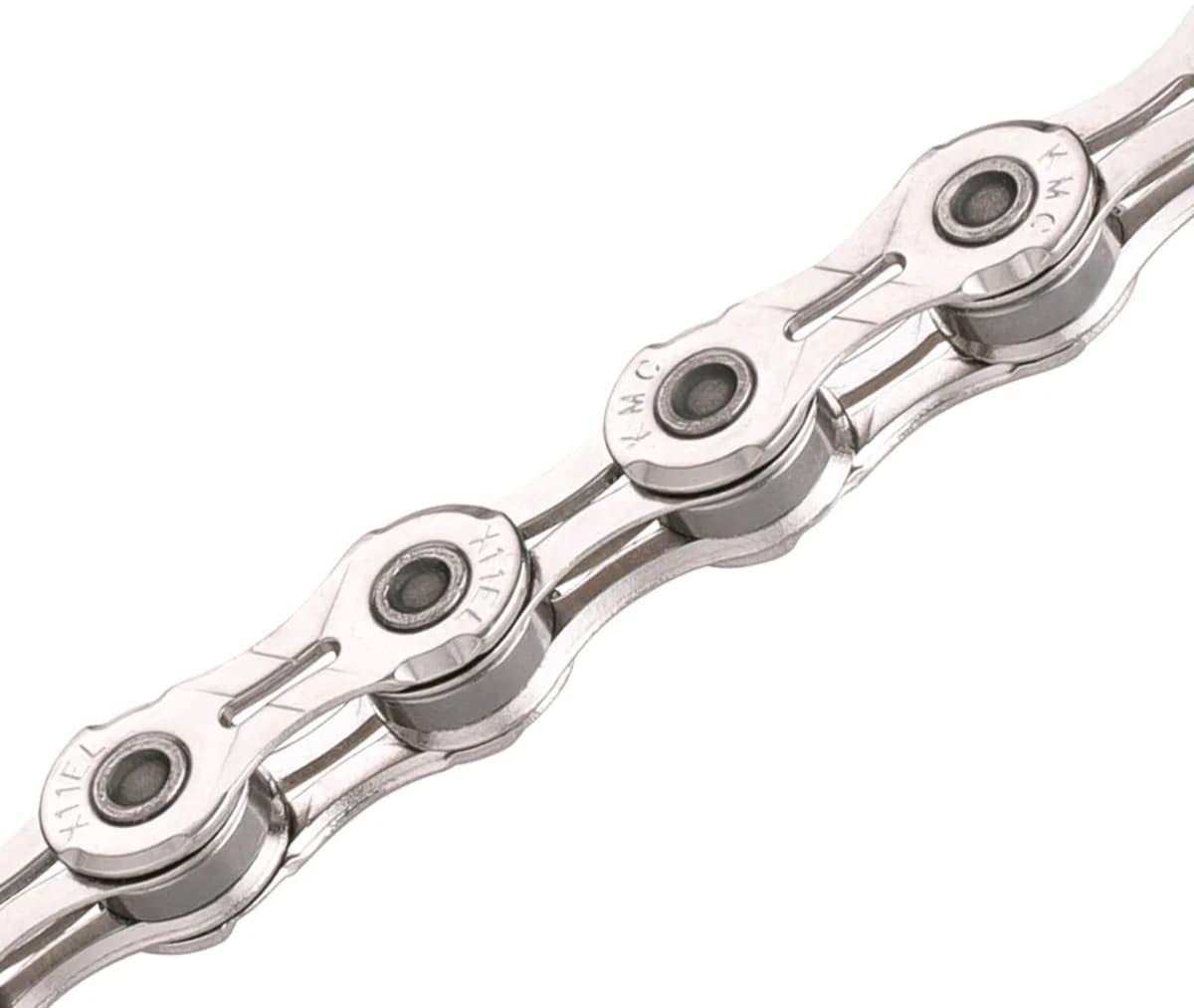
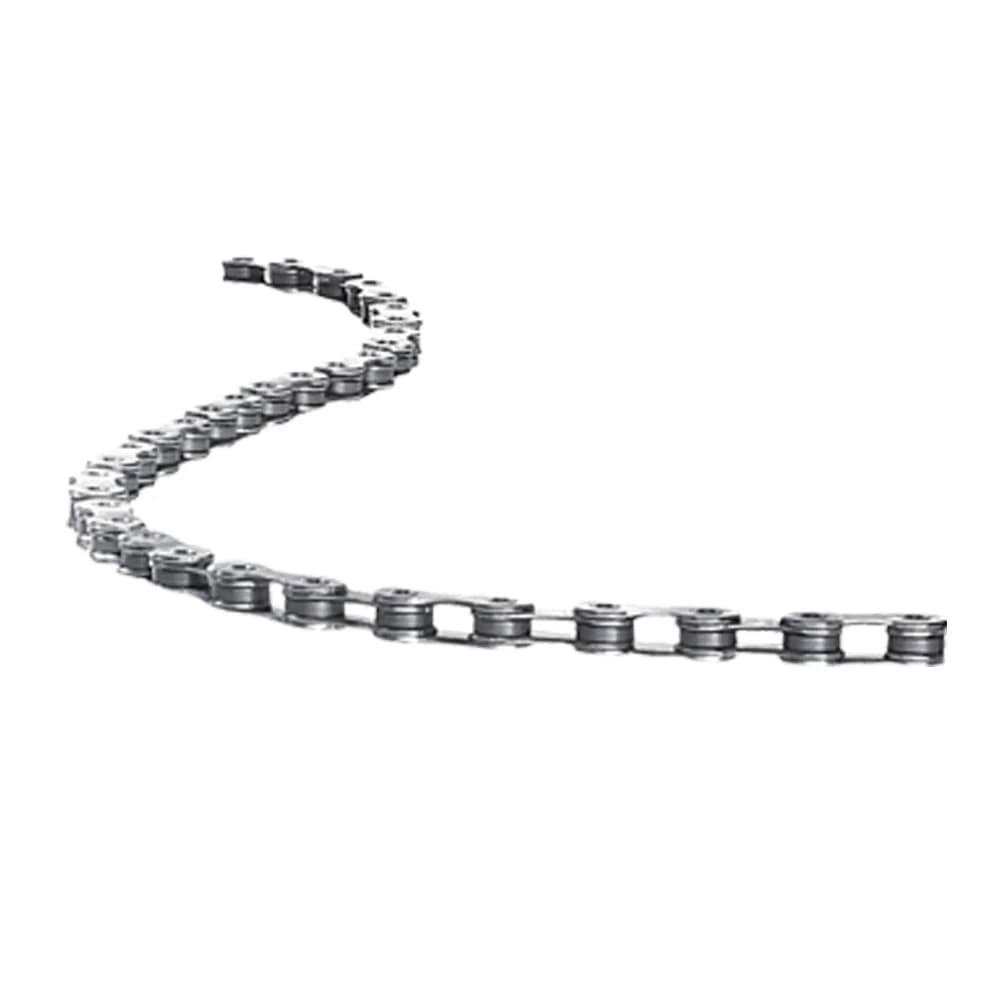
Not sure which fits? Send us your bike's make, model and year and we'll tell you.
Get the printable PDF
The same guide on two A4 pages, to print for the workshop or keep on your phone. Leave your email and we'll send the link. It unlocks every guide in the library on that device.
Already unlocked on this device? Download the PDF
This guide is general advice for home mechanics. Bikes and parts vary, so always follow the maker's instructions and torque settings for your parts. If you're not sure, or the job needs tools you don't have, ask a qualified mechanic. Travers Bikes can't be responsible for work you carry out yourself. Nothing here affects your legal rights. Sizes checked 17/11/2026 against makers' chain specs.